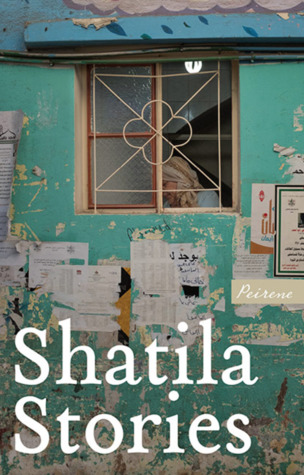
Shatila Stories- belonging, love and loss at the Shatila Refugee Camp in Beirut

Shatila Stories
Publisher- Peirene Press
Rating- 5/5
Genre- Collaborative fiction

As Khaled Hosseini rightly said that the novel isn’t about the refugee voice; it is born from it and told through it. On every page, the glint of hope for dignity and a better life is heartbreakingly alive.

The Shatila Refugee Camp was set up for Palestinian refugees in 1949 and is known for the massacre that took place in 1982 where thousands of civilians were slaughtered. This is a remarkable piece of collaborative fiction which resulted from a creative writing workshop organised by Meike Ziervogel, Publisher of Peirene Press and an NGO called Basmeh & Zeitooneh. Out of the nine writers who contributed to the book, some had never had the opportunity to complete formal schooling and some had never read a novel in their entire life. The authors are Omar Khaled Ahmad, Nibal Alalo, Safa Khaled Algharbawi, Omar Abdellatif Alndaf, Rayan Mohamad Sukkar, Safiya Badran, Fatima Omar Ghazawi, Samih Mahmoud and Hiba Mareb. The stories were written in Arabic and translated to English by Nashwa Gowanlock.

Each story in the book is a part of a larger picture – of everyday life and at times, death in Shatila. A family flee their home in Syria and settle at the Shatila Camp, and each member in the family deal with their struggles of love and loss while adjusting to the camp conditions; a girl and her father are survivors of the massacre that took place in 1982; drugs and poverty compel a family to take drastic measures. Violence and chaos runs rife at the Shatila Refugee Camp and yet in the midst of all this, new friendships are forged and independence is found. Each narrative is unique and yet inexplicably connected to the others portraying a vivid and descriptive picture of the Shatila Refugee Camp. The stories were straightforward yet potent- packed with lines that made my heart wrench and my tear ducts swell.

In the beginning I was unsure about how the novel would turn out to be but in the end, I had only tears in my eyes and no words to describe this novel. Reflective of real life incidents, the novel is brilliant, heartwarming, and heart wrenching all at the same time- don’t miss this!
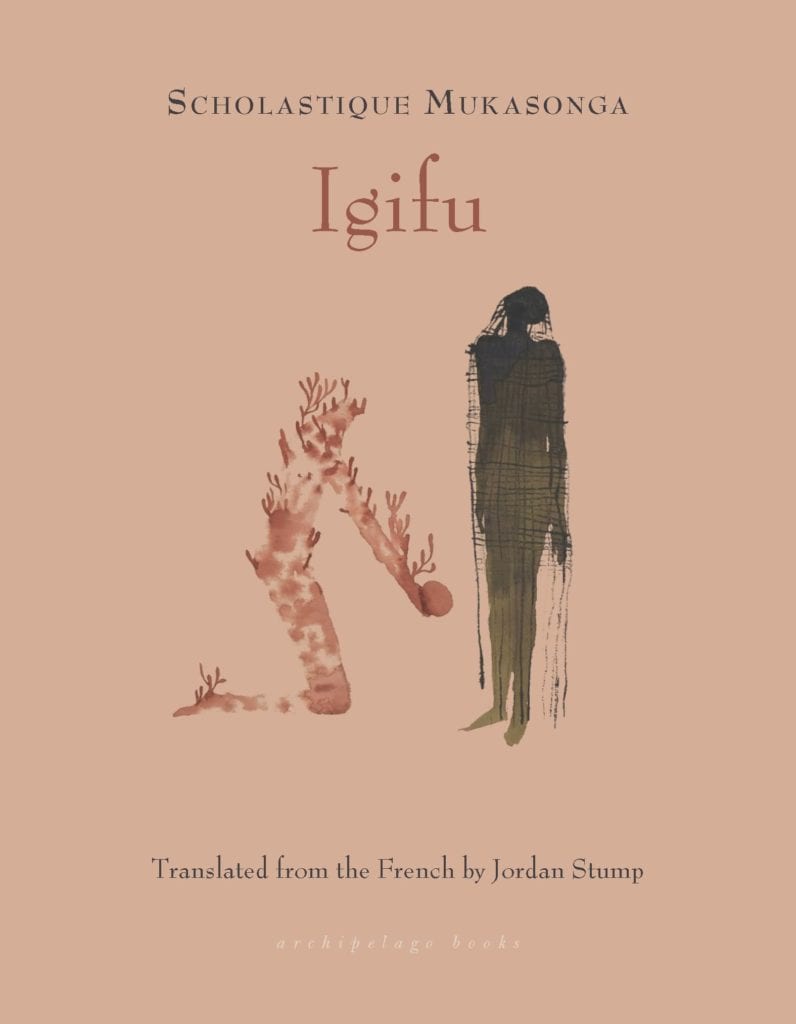
Igifu by Scholastique Mukasonga, tr. by Jordan Stump

Igifu – Archipelago Books

Igifu,
Scholastique Mukasonga tr. by Jordan Stump
Published by Archipelago Books
Genre- Autobiographical fiction, Short Stories
Rating: 5/5

“In Nyamata,’ my mother used to say, ‘you must never forget: we’re Inyenzi, we’re cockroaches, snakes, vermin. Whenever you meet a soldier or a militiaman or a stranger, remember: he’s planning to kill you, and he knows he will, one day or another, him or someone else”.

Igifu, or hunger, is a collection of autobiographical stories by the French-Rwandan author Scholastique Mukasonga and is translated from the French to English by Jordan Stump. In the centre of these stories is the collective grief and predicament of Tutsis -the living, the dead and the exiled – before and after the Rawandan genocide. Each story is heartwrenchingly beautiful, visceral and permeates through all yours senses.

The first story in the book is called ‘Igifu’, where the author takes us through a literary experience of hunger- of what it means to have this implacable tormentor within and what it does to the human body and mind. They knew how to satiate Igifu when they had their cows but the cows were taken away and killed, and the Tutsis were abandoned on the sterile soil of the Bugesera, Igifu’s kingdom. (“Igifu woke you long before the chattering birds announced the first light of dawn, he stretched out the blazing afternoon hours, he stayed at your side on the mat to bedevil your sleep. He was the heartless magician who conjured up lying mirages: the sight of a heap of steaming beans or a beautiful white ball of manioc paste, the glorious smell of the sauce on a huge dish of bananas, the sound of roast corn crackling over a charcoal fire, and then just when you were about to reach out for that mouthwatering food it would all dissolve like the mist on the swamp, and then you heard Igifu cackling deep in your stomach.”)

The second story is called “The Glorious Cow” where the author reminisces the halcyon days of when they had a lot of cows. The cows were given names, looked after and were the most important members in the family. Here, we learn the cultural and agricultural importance of the cow in Tutsi families. Milk after all, helped keep Igifu away. The third story, which almost had me in tears is called “Fear”- the fear of the sound of boots, of soldiers planning to kill, where you have to be quicker than death. Fear is their guardian angel, it helps them stay alert and awake for when death knocks, you have to run faster than death. The fourth story is called “The Curse of Beauty”- of how beauty was the greatest sorrow in the life of a Tutsi woman that extricated her from her husband, her son and herself. The last story in the book is “Grief”- here, the author writes about what it is like to lose people to a genocide and what it takes to come to terms with it (“That strength lives in you too, don’t let anyone try to tell you to get over your loss, not if that means saying goodbye to your dead. You can’t: they’ll never leave you, they stay by your side to give you the courage to live, to triumph over obstacles, whether here in Rwanda or abroad, if you go back. They’re always beside you, and you can always depend on them.”)

Igifu was my first read for Women in Translation month. WITMonth started in response to literary blogger Meytal Radzinski’s observation that only around 30% of books published in translation were by women. The purpose is to support women writers in translations and to bridge the gap through reading, reviewing and discussing books by women writers in translations.

Design a site like this with WordPress.com
Get started