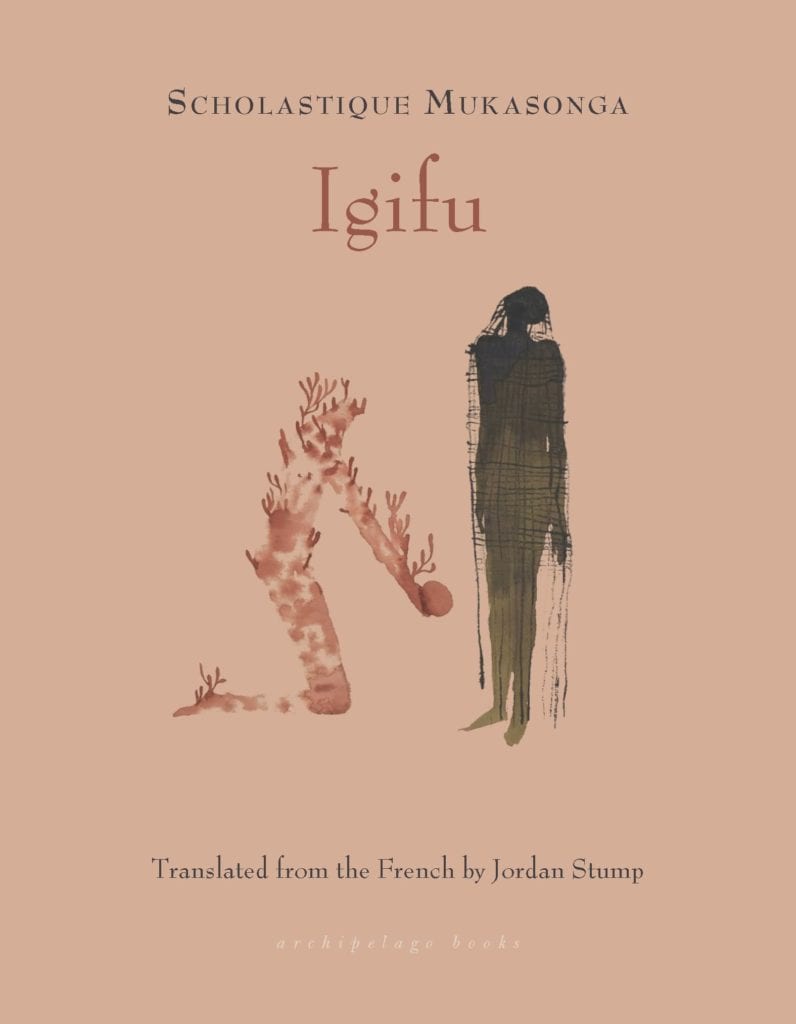
Igifu by Scholastique Mukasonga, tr. by Jordan Stump

Igifu – Archipelago Books

Igifu,
Scholastique Mukasonga tr. by Jordan Stump
Published by Archipelago Books
Genre- Autobiographical fiction, Short Stories
Rating: 5/5

“In Nyamata,’ my mother used to say, ‘you must never forget: we’re Inyenzi, we’re cockroaches, snakes, vermin. Whenever you meet a soldier or a militiaman or a stranger, remember: he’s planning to kill you, and he knows he will, one day or another, him or someone else”.

Igifu, or hunger, is a collection of autobiographical stories by the French-Rwandan author Scholastique Mukasonga and is translated from the French to English by Jordan Stump. In the centre of these stories is the collective grief and predicament of Tutsis -the living, the dead and the exiled – before and after the Rawandan genocide. Each story is heartwrenchingly beautiful, visceral and permeates through all yours senses.

The first story in the book is called ‘Igifu’, where the author takes us through a literary experience of hunger- of what it means to have this implacable tormentor within and what it does to the human body and mind. They knew how to satiate Igifu when they had their cows but the cows were taken away and killed, and the Tutsis were abandoned on the sterile soil of the Bugesera, Igifu’s kingdom. (“Igifu woke you long before the chattering birds announced the first light of dawn, he stretched out the blazing afternoon hours, he stayed at your side on the mat to bedevil your sleep. He was the heartless magician who conjured up lying mirages: the sight of a heap of steaming beans or a beautiful white ball of manioc paste, the glorious smell of the sauce on a huge dish of bananas, the sound of roast corn crackling over a charcoal fire, and then just when you were about to reach out for that mouthwatering food it would all dissolve like the mist on the swamp, and then you heard Igifu cackling deep in your stomach.”)

The second story is called “The Glorious Cow” where the author reminisces the halcyon days of when they had a lot of cows. The cows were given names, looked after and were the most important members in the family. Here, we learn the cultural and agricultural importance of the cow in Tutsi families. Milk after all, helped keep Igifu away. The third story, which almost had me in tears is called “Fear”- the fear of the sound of boots, of soldiers planning to kill, where you have to be quicker than death. Fear is their guardian angel, it helps them stay alert and awake for when death knocks, you have to run faster than death. The fourth story is called “The Curse of Beauty”- of how beauty was the greatest sorrow in the life of a Tutsi woman that extricated her from her husband, her son and herself. The last story in the book is “Grief”- here, the author writes about what it is like to lose people to a genocide and what it takes to come to terms with it (“That strength lives in you too, don’t let anyone try to tell you to get over your loss, not if that means saying goodbye to your dead. You can’t: they’ll never leave you, they stay by your side to give you the courage to live, to triumph over obstacles, whether here in Rwanda or abroad, if you go back. They’re always beside you, and you can always depend on them.”)

Igifu was my first read for Women in Translation month. WITMonth started in response to literary blogger Meytal Radzinski’s observation that only around 30% of books published in translation were by women. The purpose is to support women writers in translations and to bridge the gap through reading, reviewing and discussing books by women writers in translations.

Sally Rooney, Normal People

37539457. sy475

*****

I’ve managed to read quite a few books in the past two months (not a lot by normal standards but compared to last year, this is quite A LOT for me since I do not recall reading anything other than Shaw, Brownlie, numerous ICRC reports on autonomous weapons, ICJ judgements and a plethora of other international law stuff that Jessup required) and I devoured this book in almost one sitting. I heard so much about this book ever since it was long-listed for the Man Booker Prize 2018 but I ended up buying Milkman, the book that went on to win the Booker Prize 2018, from Blossom Book House and ignored this beauty. To be honest, I still haven’t gotten around to finishing Milkman. It’s quite rare for me to find fiction books nowadays that keep me hooked till the very end and books that I read while on a call, while eating, while brushing my teeth but finally- I was so glad I picked this one up. I kept reading it even when I was on a call with my boyfriend (sorry, if you’re reading this) and while waiting for my pizza to bake in the oven.

This book touches upon class, gender, sexuality, mental health and human relationships revolving around the microcosm of love. Connell and Marianne have grown up in the same rural town of Sligo in Ireland and also attend school together. Connell belongs to a working class family and his mother works as a cleaner at Marianne’s mansion. Connell goes to Marianne’s house after school to pick up his mother so that they can go home together, within this time he gets familiar with Marianne. Marianne is ordinary, least interested in parties, far from popular and friendless and Connell is quite the opposite- not the kind who loves parties but the kind who attends them anyway. They get intimate once and Connell is persistent on keeping their relationship a secret from everyone else at school. Hence, a connection blossoms between the two of them which they carry with them throughout the novel. Both of them apply to Trinity for college and both of them get in and things take a sudden turn. Marianne is popular, admired, a party goer if not a party person and Connell finds himself on the opposite end of the spectrum- less friends, unpopular and quite lonely. They get together, they part ways and see other people only to come back to each other. They discover that their lives are inexplicably related and they fall out only to fall back into each other’s lives one way or another.

Concluding Thoughts

I’ve already written about how much the book was un-put-down-able for me. I absolutely loved it even though at times I detested a few things that Connell and Marianne did but life’s not perfect but makes sense as a whole and that’s what the book is about. I also loved the writing, Rooney’s writing flows like poetry, it felt as if I was really present and that I was actually experiencing the story in Sligo, in Dublin, in Marianne’s mansion, at Connell’s house and everywhere else. Cannot think of a better book to enjoy with my umpteen number of green tea cups and coffee mugs when Bengaluru rains.

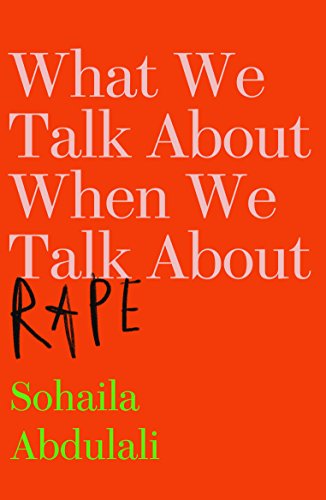
Sohaila Abdulali, What We Talk About When We Talk About Rape

What We Talk About When We Talk About Rape eBook: Abdulali ...

After reading what is now in my ‘100 books to read in a lifetime’ list, I realized how inadequate and superficial the conversation about rape and sexual assault is. Anyway, cutting to the chase, I loved this book.

Sohaila Abdulali is a writer, counselor, activist and survivor who delves into multifarious questions surrounding sexual assault and rape globally. For this book, she draws on her own experience, experiences of others, heavy research and her work as a head of a rape crisis center in Boston.

The book was brilliant for me because it’s a step forward in decrying the awkward silence that comes with conversations around rape and assault. It felt like a conversation full of insights, personal experiences and experiences of others. There are people from all over the world narrating their experiences with rape and abuse cutting across class, across profession and across regions.

The book made me pause and re-evaluate my preconceived notions about rape, objectification, humanity, and consent. The book opened my eyes, for instance, I did not know people could experience something like dentophobia after a horrifying experience. Or the story of Thordis & Tom. For those who don’t know, Thordis Elva was raped by her boyfriend Tom Stranger, an exchange student from Australia and after several years of torment she wrote to Tom to tell him of the pain he had inflicted on her. This marked the start of an eight-year correspondence culminating in the two of them meeting in Cape Town in 2013 and they later went on to start “The forgiveness project“that shares stories from both victims/survivors and perpetrators of crime and conflict who have rebuilt their lives following hurt and trauma. I found this story particularly fascinating.

I also had my light-bulb moment after learning that rape does not just happen because of objectification of women, there are multiple factors at play. The fact that one seeks vengeance, or seeks power over someone or seeks to humiliate is not because they view their victims as objects. We don’t feel the urge to humiliate objects. She also talks about mercy, about the taboos, incest, the prevention (if there really is one), difference between sex workers and trafficked humans, sexual autonomy, patriarchy and most importantly about rape.

Design a site like this with WordPress.com
Get started