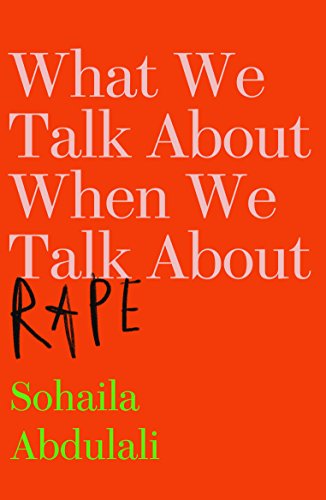
After reading what is now in my ‘100 books to read in a lifetime’ list, I realized how inadequate and superficial the conversation about rape and sexual assault is. Anyway, cutting to the chase, I loved this book.
Sohaila Abdulali is a writer, counselor, activist and survivor who delves into multifarious questions surrounding sexual assault and rape globally. For this book, she draws on her own experience, experiences of others, heavy research and her work as a head of a rape crisis center in Boston.
The book was brilliant for me because it’s a step forward in decrying the awkward silence that comes with conversations around rape and assault. It felt like a conversation full of insights, personal experiences and experiences of others. There are people from all over the world narrating their experiences with rape and abuse cutting across class, across profession and across regions.
The book made me pause and re-evaluate my preconceived notions about rape, objectification, humanity, and consent. The book opened my eyes, for instance, I did not know people could experience something like dentophobia after a horrifying experience. Or the story of Thordis & Tom. For those who don’t know, Thordis Elva was raped by her boyfriend Tom Stranger, an exchange student from Australia and after several years of torment she wrote to Tom to tell him of the pain he had inflicted on her. This marked the start of an eight-year correspondence culminating in the two of them meeting in Cape Town in 2013 and they later went on to start “The forgiveness project“that shares stories from both victims/survivors and perpetrators of crime and conflict who have rebuilt their lives following hurt and trauma. I found this story particularly fascinating.
I also had my light-bulb moment after learning that rape does not just happen because of objectification of women, there are multiple factors at play. The fact that one seeks vengeance, or seeks power over someone or seeks to humiliate is not because they view their victims as objects. We don’t feel the urge to humiliate objects. She also talks about mercy, about the taboos, incest, the prevention (if there really is one), difference between sex workers and trafficked humans, sexual autonomy, patriarchy and most importantly about rape.
 Literature, Poetry and Reading.