i want to die but i want to eat tteokbokki by Baek Sehee tr. by Anton Hur

Genre- memoir, non-fiction

“Why are we so bad at being honest about our feelings? Is it because we’re so exhausted from living that we don’t have the time to share them? I had an urge to find others who felt the way I did. So I decided, instead of aimlessly wandering in search of these others, to be the person they could look for—to hold my hand up high and shout, I’m right here, hoping that someone would see me waving, recognize themselves in me and approach me, so we could find comfort in each other’s existence.”

A friend and I were at blossom book house a couple of days ago and despite a rising number of unread books on our shelves, we impulsively purchased two separate copies of “I Want to Die but I Want to Eat Tteokbokki” by Baek Sehee after reading the blurb (as individuals who struggle with understanding and responding to emotional cues, we were sold). I was drawn to it because of the raw emotion and vulnerability displayed in the writing.

The book tells the story of a young woman struggling with depression and the desire to end her life, while at the same time finding solace in the simple pleasure of eating tteokbokki, a Korean street food.

Baek Sehee’s writing is incredibly powerful and moving. She deftly captures the intense pain and despair of depression, as well as the all-consuming thoughts of suicide that often accompany it. At the same time, she also conveys the small moments of joy and relief that come from indulging in a favorite food, and how those moments can provide a temporary escape from the darkness.

One of the things I loved most about this book was the way Baek Sehee interwove her personal experiences with depression and thoughts of suicide with the cultural significance of tteokbokki in Korean society. She explores how the spicy, savory dish is often seen as a comfort food, and how it can bring people together in moments of happiness or sorrow.

As someone who has struggled with depression myself, I found myself completely drawn into the protagonist’s story and could relate to her experiences on a deep level. I also appreciated the way Baek Sehee tackled such a difficult and sensitive subject with honesty and sensitivity, refusing to shy away from the painful realities of mental illness. Very honestly, I cannot comment on the psychiatrist’s ability to help their patient and at times I was extremely confused with the kind of guidance and advice that the psychiatrist would give out. That being said, the book brought me a lot of peace and comfort and helped me get over a bad reading slump.

The biggest takeaway for me, personally, as someone who is an empath- through and through (it’s either that or I have a very bad messiah complex) was the fact that sometimes empathising with others can actually be a bad thing. For instance, when one empathises too much, it becomes a chore and actually results in decreasing empathy. So, no more casually giving out my freshly baked chocolate chip cookies to anyone outside my inner circle. Makes a lot of sense, really.

“I Want to Die but I Want to Eat Tteokbokki” is a beautifully written and deeply moving book that offers a poignant exploration of depression and the search for moments of joy in the midst of despair. I highly recommend it to anyone who has experienced mental illness or who simply wants to better understand the complexities of the human mind.

Flexing Muscles by Ravikumar Kashi

Publisher- Reliable Copy
Genre- Non-Fiction, Essay
Rating- 5/5

Flexing Muscles is an amalgamation of a long form essay in English and Kannada by Ravikumar Kashi. The book is a meditation on the political flex banners that have helped shape the narrative of Bangalore in recent times. The book is replete with photographs collected by the author- of political flex banners and some ancient paintings which help us understand the format of present day flex banners. The author reflects on the history of flex banners and their significance in urban Bangalore’s visual popular culture and changing political narrative.

The essay is divided into five parts. In the first part titled ‘Navigating the City’, the author describes the changing demographic of Bangalore. He also writes about how Bangalore became the silicon valley of India and a cosmopolitan city.

In ‘Optics and Narratives’, the author reflects on the history of how flex banners became popular for reaching out to large audiences and their emergence in the city- flex banners were and continue to be a suitable medium for visual communication due to their cheap production costs and durability .

In ‘Posture and Position’, the author reflects on the format of flex banners- how the photos of the people on these political banners reflect the hierarchies and relationship between the persons- he also compares them to some paintings from the past. For instance- in a flex banner, the most prominent person’s image will be the largest and those of his followers will be smaller in size; similarly in a painting of Lord Vishnu, he occupies the center position and his character is greater in size than goddess Lakshmi who occupies a much smaller space in the painting – thus, there is a common thread that connects historical paintings and today’s flex banners.

In ‘Age of the Sene’ the author writes about an aggressive and chauvinistic side of Bangalore- the one that uses these flex banners to evoke authority, support and power from the local people. Multifarious sene groups have emerged on the scene in the last decade who seek to protect their culture, land and language from “outsiders”. They’ve taken up their roles as protectors exposing their hyper masculine intentions of protecting their supposedly feminine and fragile land and language.

In the last part titled ‘Echo Chamber’, the author writes about how the messages and sentiments expressed through flex banners is a significant one due to their scale and physical presence. Simply removing these banners does not change the latent anxieties that need to be resolved; by removing them, we make these anxieties invisible instead.

Political flex banners tell us a lot about an area- changing through time and space, marking new territories and shaping new narratives. Flexing Muscles is a book that explores the significance of these banners in present day visual culture and political narrative of Bangalore. It was a fast-paced essay and one that was well-researched and informative with interesting citations, illustrations and personal anecdotes. The Kannada version of the essay is also available in the same book. I enjoyed reading it thoroughly and would recommend it to anyone interested in learning and reading about Bangalore or flex banners.

“The circle of an empty day is brutal…”: Days of Abandonment by Elena Ferrante tr. by Ann Goldstein

Buy The Days of Abandonment Book Online at Low Prices in India ...

I read Ties by Domenico Starnone and loved it, I was particularly interested in Days of Abandonment because both books explore the fallout of a husband’s fidelity. The book was an emotional ride for me, it was depressing and I loved it. Starnone and Ferrante are married to each other and both their books touch upon the theme of a husband who leaves his wife and two children for a younger woman. Both also involve an old neighbor and a pet. Ferrante explores the mental agony of the wife after her husband abandons her and the turbulent aftermath of the marital betrayal; whereas, Starnone writes about the mental agony of the wife, the husband and lastly the children in three parts.

The novel is set in Turin where Olga lives with her husband Mario, her children Illaria and Gianni and their dog Otto. One day, Mario declares that he does not want to be with her anymore. The novel captures the wife’s descent into madness and finally finding some semblance after her husband deserts her for a much younger woman. Their neighbour Carrano also plays a significant role in the novel. Reading the book was almost similar to experiencing a real life vertigo- Olga’s suffering throughout the novel was portrayed brilliantly. It was raw, vulnerable, and a true description of the id. There is no sugar coating. Olga has given her husband everything- she carried him through his education years to raising his children and their home (quoting Olga, “I had taken away my own time and added it to his, to make him more powerful. I had put aside my own aspirations to go along with his. At every crisis of despair I had set aside my own crises to comfort him. I had disappeared into his minutes, into his hours, so that he could concentrate“).

She mentions at one point “We don’t know anything about people, even those with whom we share everything“. The veils of marriage, striving to be perfect for one another, the facades of personalities and pretence of being someone else for the sake of one another are shattered one by one throughout the novel; if only Olga had displayed this vulnerable side within the marriage. Not giving spoilers but the novel does not end badly, Olga learns to move on, to accept that life outside Mario is possible (quoting Olga,”What a mistake, above all, it had been to believe that I couldn’t live without him, when for a long time I had not been at all certain that I was alive with him“). She realizes that she did not feel like herself with him, she felt like another version of him, always adjusting and evolving according to his needs and desires.

Concluding Thoughts

I’ve already mentioned how reading the novel was similar to experiencing a vertigo for me. All in all, Ferrante paints a terrific picture of a wife’s mental descent during the days of her abandonment. It was beautiful, raw and visceral. Moreover, it is a reminder of how fragile human relationships are, how indecipherable people can be and how overcoming is difficult yet possible.

Paul Kalanithi, When Breath Becomes Air

25899336

*****

I’ve read various books and memoirs of people battling life altering diseases such as Tuesdays with Morrie- a story about life from conversations between a student and his professor who is diagnosed with ALS, The Last Lecture- lessons on life from a computer science educator diagnosed with pancreatic cancer. I was recommended to read this book by a friend last year who told me it was ‘crazy'(she meant deeply moving and crazy in a good way). A little late to the party but like the adage goes- better late than never.

Paul Kalanithi was an Indian-American neurosurgeon and writer and he was diagnosed with stage IV lung cancer towards the end of his decade long training as a neurosurgeon. He provides an insight into his life as a literature student, as a scientist, as a doctor, as a husband, as a father, as a son, as a brother and as a person battling cancer. The book is divided into two halves- the first half is about him training to become a doctor and treating the dying and the second half is about him coming to terms with his cancer and the prospect of death. According to goodreads, this books is about Kalinithi wrestling to answer questions such as- What makes life worth living in the face of death? What do you do when the future, no longer a ladder toward your goals in life, flattens out into a perpetual present? What does it mean to have a child, to nurture a new life as another fades away?

Concluding Thoughts

I was able to understand and muse about many philosophical questions pertaining to life and death through Kalanithis writing. His descriptions of life, death, suffering, relationships, children and allusions to multifarious pieces of literature paint vivid images for the reader to understand. I’m going to keep this short because nothing I say will compare to the emotional roller-coaster that this book takes you on. It is not a joyride, but surely a ride worth experiencing. The most heart wrenching part of the book indubitably is the epilogue, written by Lucy Kalanithi, Paul’s wife which was deeply moving and I could feel tears roll down my face. It was empathizing, emotional and relatable because I lost someone I loved dearly few years ago. To me, the book was more like a memoir on being alive rather than dying.

Slavoj Žižek, Pandemic!: COVID-19 Shakes the World.

Pandemic!: Covid-19 Shakes the World

****

Just realised that my so-called reviews have been devoid of ratings. Personally, I think ratings are overrated hence the absence.

The Slovenian philosopher, Zizek says that the greatest act of love is to stay distant from the object of your affection and provides a brief record of the coronavirus pandemic that is engulfing us. He draws parallels from Hegel, Marx, Lacan and pop-culture figures such as Quentin Tarantino, H.G. Wells. Mostly he talks about the need for a global solidarity to beat the pandemic since we’re all in the same boat now. He writes about how countries all around the world including the ones who are far right in their ideologies are adopting socialist measures to fight the pandemic and how a new form of communism may be the only way of averting a descent into global barbarism. (The Trump government in the United States is taking over the private sector. Boris Johnson wants to nationalise the British railways. A universal form of basic income is being contemplated across much of Europe.)

In his view, it isn’t humankind itself but our current institutions and ways of life that constitute the real virus. The virus does not see ideology and our fight against the virus must take precedence over our ideologies for the greater good. He writes how only a mutual trust between the state and its citizens can prevent the pandemic from escalating further. I particularly liked hoe beautifully, he is critical of the Italian philosopher Girogio Agamben, according to whom; the ongoing lockdown measures are frantic, irrational, and absolutely unwarranted for a supposed epidemic of coronavirus, which is just another version of flu.

Concluding Thoughts

Cogent in his thoughts and witty in the arguments he puts forth, Zizek does a decent job in this book. I enjoyed reading the book, it was really informative. Absolutely loved his critique of the alt-right and fake left. Kind of read like a pamphlet to me at times but loved it nonetheless.

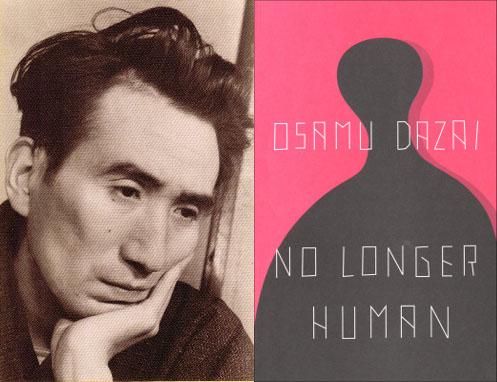
Osamu Dazai, No Longer Human

Osamu Dazai – No Longer Human | There and back again

I came across this book on my goodreads homepage in the form of a review. I read the review and was intrigued by the character’s feelings of isolation and stoicism and hence, decided to read the book immediately. I’ve been trying to read authors from around the world lately and No Longer Human by Osamu Dazai is my latest addition to reading Japanese authors after having read Haruki Murakami and Hiromi Kawakami. I like to read up on the author before venturing into a book since it helps me understand things better and from what I read, his style of writing seems to be semi-autobiographical. I shall, however, refrain from drawing parallels from the authors life since you can do it yourself.

The book is divided into three parts, referred to as ‘books’ and the third book has two parts. The book starts with the protagonist Oba Yozo’s childhood and chronicles his odyssey as a troubled and taciturn person. Since the inception, he experiences a sense of isolation, an inability to express his true feelings to the world and also a peculiar dislike for human beings. In the first memorandum, he starts to feel a deep sense of alienation, finds it difficult to converse with other people and experiences a mortal dread of human beings. He feigns emotions in everything he does or says . I start developing a distaste for the character after his self-destructive streak of bottling up and feigning emotions exacerbates in the second memorandum due to excessive drinking, smoking and encounters with prostitutes. It also sort of deals with human relationships in the context of an adverse socio-economic status. To me, the third memorandum felt like an extended and more intense streak of destructive behavior not only towards himself but also towards others. He finally feels disqualified to be a human being.

I had mixed feelings from reading about a character such as Yozo. I was able to relate to some of his fears and sense of alienation but at the same time was unable to comprehend his lack of empathy for those around him. The way I comprehended the book, it felt like his lack of empathy arose as a defense mechanism to avoid pain due to his troubled relationship with his father and this dangerous habit of feigning emotions and reclusiveness followed him throughout his journey in the book. I personally feel like this is a book about depression and addiction, and it is way way way more real, beautifully written, raw and better than what kids read nowadays like ‘Thirteen Reasons Why’.

It was quite a struggle for me to continue reading this book because it felt asphyxiating at times. I also felt like some of the book was lost in translation and the translator could have done a better job with the translation, perhaps?

Basharat Peer, Curfewed Night


*****

“Srinagar is a medieval city dying in a modern war. It is empty streets, locked shops, angry soldiers and boys with stones. It is several thousand military bunkers, four golf courses, and three book-shops. It is wily politicians repeating their lies about war and peace to television cameras and small crowds gathered by the promise of an elusive job or a daily fee of a few hundred rupees. It is stopping at sidewalks and traffic lights when the convoys of rulers and their patrons in armored cars, secured by machine guns, rumble on broken roads. It is staring back or looking away, resigned. Srinagar is never winning and never being defeated.” 

A vivid portrayal of the sufferings of the Kashmiris, this book is a part memoir and part collection of reflections on Kashmir by Basharat Peer. This book chronicles his life and experiences in Kashmir from his childhood to his adulthood. Born in Anantnag, a teen aged Peer initially develops an interest in militancy considering the deteriorating situation in Kashmir but is soon discouraged to do so by his family. This was the time when many young boys crossed the LoC to receive training and arms from Pakistani terrorist groups. But only a few returned safe to their homes in Kashmir. The Government of India responded by adopting a heavy counterinsurgency approach to crush the popular armed rebellion against Indian rule in the region, deploying paramilitary forces to deal with the militants and more than often, the common man had to bear the brunt of the atrocities committed by both the parties- the militants and the military.

After Peer’s family is made aware of his interest in militancy, the Kalashnikov rifles, the dream of an independent Kashmir, he is called home from his boarding school. His father is an erudite government official who believes in the power of education, and this is what he had to say about his son’s interest in militancy-

“If you want to do something for Kashmir, I would say, you should read.”

That was all Peer needed to hear to curb his appetite for militancy and pursue his most powerful weapon instead- education. Soon, he leaves for Delhi to pursue higher education, getting his degree in law and later practicing as a journalist in the city. The novel also offers snippets of the Parliament attack trial of 2001.

After his parents’ narrow escape from a militancy bomb blast, Peer soon returns to Kashmir to report the chilling atrocities committed in Kashmir, the fear of militancy and the heinous atrocities committed by the Indian paramilitary forces- the “interrogation” center called Papa-2 which is a requiem of the holocaust, a woman’s wedding turned into a carnage, rape, wanton shootings of civilians, etc. There are also times when Peer does not criticize the Indian army but thinks of them as normal citizens doing their job. Although, I wish there were more anecdotes from the Indian paramilitary’s point of view and more about the pro-India Muslims and Kashmiri Pandits. Peer condemns the acts of militants as they killed hundreds of pro-India Muslims ranging from political activists to suspected informers for Indian intelligence. The militants killed hundreds of Pandits on similar grounds, or without a reason. Here’s a conversation between Peer and a member of the Indian paramilitary-

“The power of the caste system was evident in his first smile. He showed signs of relaxation and turned towards me. I talked about my friends form my Delhi University days. He was from Delhi University too. ‘I was in the law faculty, where were you?’ I asked. He had been in a college next to mine. I talked about the university, about the college festivals, the hangouts, the rivalries, the girls’ hostel nearby, almost everything one misses about university life. He seemed to have transformed into a Delhi University alumnus and forgotten he was an Indian paramilitary officer posted in Kashmir. His language changed as he spoke……’Give me a fag, man! And get me some tea,’ he smiled. We had tea and smoked. He apologized; the room full of journalists apologized back. Peace was made. As he began to leave, he said, ‘I was a different man before I joined the force and came to Kashmir.’ “ 

Peer ends his book with the hope that they (soldiers, militants, etc.) would cease being part of processes that reduced individuals to suspects or military targets, shorn of all human complexity; processes that left them with bare nomenclatures like militants, soldiers, paramilitaries. He hopes that some day they would return to their homes.

Concluding Thoughts

To be very honest, I had grown up with a sense of contempt for Kashmiris who do not want to be associated with the Indian State. It is only in my formative years that I was exposed to the other side of the story about the various atrocities carried out against Kashmiris by the State. This book played a huge role in shattering my chauvinism. I remember tears forming in my eyes when I read about the rape of a woman on the day of her wedding by the Indian paramilitary men and later, when I read about Papa 2- a torture chamber reminiscent of the gas chambers during the holocaust. Peer’s writing is lyrical and pulls you into the stories of the disappeared, the tortured, the neglected, the raped and more.

Design a site like this with WordPress.com
Get started