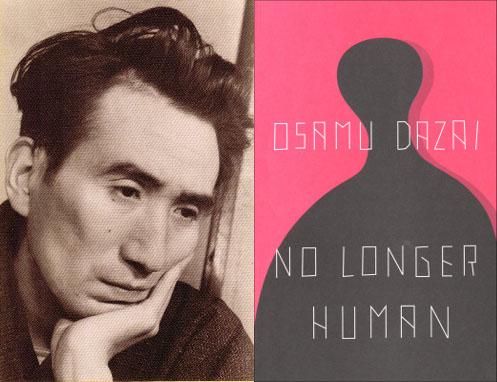
I came across this book on my goodreads homepage in the form of a review. I read the review and was intrigued by the character’s feelings of isolation and stoicism and hence, decided to read the book immediately. I’ve been trying to read authors from around the world lately and No Longer Human by Osamu Dazai is my latest addition to reading Japanese authors after having read Haruki Murakami and Hiromi Kawakami. I like to read up on the author before venturing into a book since it helps me understand things better and from what I read, his style of writing seems to be semi-autobiographical. I shall, however, refrain from drawing parallels from the authors life since you can do it yourself.
The book is divided into three parts, referred to as ‘books’ and the third book has two parts. The book starts with the protagonist Oba Yozo’s childhood and chronicles his odyssey as a troubled and taciturn person. Since the inception, he experiences a sense of isolation, an inability to express his true feelings to the world and also a peculiar dislike for human beings. In the first memorandum, he starts to feel a deep sense of alienation, finds it difficult to converse with other people and experiences a mortal dread of human beings. He feigns emotions in everything he does or says . I start developing a distaste for the character after his self-destructive streak of bottling up and feigning emotions exacerbates in the second memorandum due to excessive drinking, smoking and encounters with prostitutes. It also sort of deals with human relationships in the context of an adverse socio-economic status. To me, the third memorandum felt like an extended and more intense streak of destructive behavior not only towards himself but also towards others. He finally feels disqualified to be a human being.
I had mixed feelings from reading about a character such as Yozo. I was able to relate to some of his fears and sense of alienation but at the same time was unable to comprehend his lack of empathy for those around him. The way I comprehended the book, it felt like his lack of empathy arose as a defense mechanism to avoid pain due to his troubled relationship with his father and this dangerous habit of feigning emotions and reclusiveness followed him throughout his journey in the book. I personally feel like this is a book about depression and addiction, and it is way way way more real, beautifully written, raw and better than what kids read nowadays like ‘Thirteen Reasons Why’.
It was quite a struggle for me to continue reading this book because it felt asphyxiating at times. I also felt like some of the book was lost in translation and the translator could have done a better job with the translation, perhaps?
 Literature, Poetry and Reading.