Slavoj Žižek, Pandemic!: COVID-19 Shakes the World.

Pandemic!: Covid-19 Shakes the World

****

Just realised that my so-called reviews have been devoid of ratings. Personally, I think ratings are overrated hence the absence.

The Slovenian philosopher, Zizek says that the greatest act of love is to stay distant from the object of your affection and provides a brief record of the coronavirus pandemic that is engulfing us. He draws parallels from Hegel, Marx, Lacan and pop-culture figures such as Quentin Tarantino, H.G. Wells. Mostly he talks about the need for a global solidarity to beat the pandemic since we’re all in the same boat now. He writes about how countries all around the world including the ones who are far right in their ideologies are adopting socialist measures to fight the pandemic and how a new form of communism may be the only way of averting a descent into global barbarism. (The Trump government in the United States is taking over the private sector. Boris Johnson wants to nationalise the British railways. A universal form of basic income is being contemplated across much of Europe.)

In his view, it isn’t humankind itself but our current institutions and ways of life that constitute the real virus. The virus does not see ideology and our fight against the virus must take precedence over our ideologies for the greater good. He writes how only a mutual trust between the state and its citizens can prevent the pandemic from escalating further. I particularly liked hoe beautifully, he is critical of the Italian philosopher Girogio Agamben, according to whom; the ongoing lockdown measures are frantic, irrational, and absolutely unwarranted for a supposed epidemic of coronavirus, which is just another version of flu.

Concluding Thoughts

Cogent in his thoughts and witty in the arguments he puts forth, Zizek does a decent job in this book. I enjoyed reading the book, it was really informative. Absolutely loved his critique of the alt-right and fake left. Kind of read like a pamphlet to me at times but loved it nonetheless.

‘FC road’ or ‘FC college road’, Memories from a place.

From L to R, Model Colony Lake, fuel for the day against the backdrop of Fergusson College, my first encounter with the ducks and their peculiar liking for Parle-G, Cafe Goodluck in all its glory (could not find a picture in the library so took it from here).

It is yet another uneventful day in my life amidst the lockdown that does not seem to end and I am suddenly reminded of Venus traders. For those of you who’ve been in Pune, you might know that Venus is every stationery hoarder’s heavenly abode. The two-storeyed building hidden away in the lush green by-lanes of FC road or as some like to call it, FC college road. FC college road would literally mean Fergusson College College Road so I really do not understand the need for college after FC. Anyway, some things, you just learn to tolerate.

For most punekars, going to FC road or JM road also comes with the perpetual fear of getting your two-wheeler towed. It has happened to me twice- once while I parked my two-wheeler right outside the lane between Dunkin Donuts and Starbucks (apparently, my vehicle was outside the permitted confines of parking) and the second time, it was when I was so thrilled to go to Venus during one of my free periods that I parked my vehicle in the even lane on an odd day. In my defense, I was into paper-cutting back then and really needed those fancy tools to make stencils which are now pasted on my wall back in my college. I have no regrets whatsoever except for the fact that I could have been mindful but had I really been mindful, I would have one less towing story to tell today.

I spent a huge part of my day gallivanting in and around FC road. I rarely read Pune Times but this one time, just once, I was lucky to have come across Radhika Apte’s interview in the newspaper about her growing up in Pune’s Model Colony (again, very close to FC road). I love Model Colony and Model Colony Lake was a gem of a discovery I made that day, thanks to Radhika Apte. Soon enough, I started to go to the lake almost every day and my favorite part of the whole experience was feeding the ducks. I always carried some Parle-G biscuits with me so that I could feed a stray dog wherever I go and once, a line of ducks started to surround me while I was breaking the biscuits into little pieces for the dogs to eat inside the park’s premises. Now, I do not know if ducks are allowed to eat biscuits, but I was definitely prohibited from feeding the ducks. I fed them anyway. I had something extra to carry in my bag now- oats for the ducks along with biscuits for the dogs. I never carried lunch to junior college, so I did not mind the extra weight.

If there is something I remeber very fondly about Pune, it has to be this- decent weather that Pune promises, noon, too many trees, too many birds, model colony lake and feeding ducks alone. I also bunked classes sometimes, to feed ducks. Now that I think about it, I may have bunked classes to go read in the British Library or walk around FC road, grab the best vada pav from Chotu’s on JM road, to eat a Rajasthani or Gujarati thali from Panchavati (ah the aamras!), to meet friends at Goodluck for the best bun-maska and chai, to make the occasional visits for lunch to Subway on FC road or German Bakery on Law College Road and to study at Dunkin Donuts or Starbucks before exams. There was also this misal pav place near the signal that I love, ah yes- Sir Misal. (The things I would give up to go have a plate right about now!) Some of you may disagree with me here and think Katakirr is the best misal place but for me, its way too spicy so the award goes to Sir Misal. It does not matter to me whether someone calls it ‘FC road’ or ‘FC college road’, it will always hold a special place in my heart except for the unwarranted towing. Actually, scratch that, the towing too.

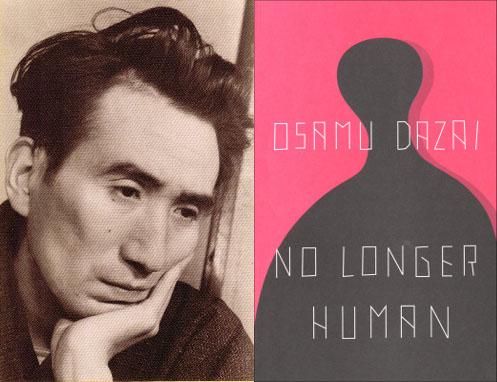
Osamu Dazai, No Longer Human

Osamu Dazai – No Longer Human | There and back again

I came across this book on my goodreads homepage in the form of a review. I read the review and was intrigued by the character’s feelings of isolation and stoicism and hence, decided to read the book immediately. I’ve been trying to read authors from around the world lately and No Longer Human by Osamu Dazai is my latest addition to reading Japanese authors after having read Haruki Murakami and Hiromi Kawakami. I like to read up on the author before venturing into a book since it helps me understand things better and from what I read, his style of writing seems to be semi-autobiographical. I shall, however, refrain from drawing parallels from the authors life since you can do it yourself.

The book is divided into three parts, referred to as ‘books’ and the third book has two parts. The book starts with the protagonist Oba Yozo’s childhood and chronicles his odyssey as a troubled and taciturn person. Since the inception, he experiences a sense of isolation, an inability to express his true feelings to the world and also a peculiar dislike for human beings. In the first memorandum, he starts to feel a deep sense of alienation, finds it difficult to converse with other people and experiences a mortal dread of human beings. He feigns emotions in everything he does or says . I start developing a distaste for the character after his self-destructive streak of bottling up and feigning emotions exacerbates in the second memorandum due to excessive drinking, smoking and encounters with prostitutes. It also sort of deals with human relationships in the context of an adverse socio-economic status. To me, the third memorandum felt like an extended and more intense streak of destructive behavior not only towards himself but also towards others. He finally feels disqualified to be a human being.

I had mixed feelings from reading about a character such as Yozo. I was able to relate to some of his fears and sense of alienation but at the same time was unable to comprehend his lack of empathy for those around him. The way I comprehended the book, it felt like his lack of empathy arose as a defense mechanism to avoid pain due to his troubled relationship with his father and this dangerous habit of feigning emotions and reclusiveness followed him throughout his journey in the book. I personally feel like this is a book about depression and addiction, and it is way way way more real, beautifully written, raw and better than what kids read nowadays like ‘Thirteen Reasons Why’.

It was quite a struggle for me to continue reading this book because it felt asphyxiating at times. I also felt like some of the book was lost in translation and the translator could have done a better job with the translation, perhaps?

Of necessary friendships and late night coffees

I read Helen Kellers autobiography in school and came across a rather peculiar adage- “Walking with a friend in the dark is better than walking alone in the light”. Though back then I laughed it off thinking it might resonate with someone like Helen Keller but can never be true for me. It took me five years to change my point of view about the adage. I very much agree with Keller today. Friends are necessary and important. More than a want, friendships are a need.

To be very honest, my survival instincts started acting up after I left the comfort zone of home and family and landed in college. I fainted on the first day I arrived in college and that’s when I realized that I need to make friends, whether I like it or not and so I did. It was one of the wisest decisions I’ve ever made, it has not only saved me from attendance shortages but also helped me fetch extra marks in exams thanks to friends who stay up with me thereby helping me pull those unimaginable all-nighters.

As I inch closer to project submission deadlines in the midst of a lockdown, away from college, and as my mother stares at me with absolute disbelief that I’m brewing myself a cup of coffee at 3 am, this is presumably the first time in life I feel not so sure about completing my projects on time or of not doing a good enough job. Suddenly, it is not about the deadlines and a lump rises at the back of my throat. This angst emanates from the sudden realization of being away from college and missing my friends and not knowing when we’ll see each other again. I’m finally starting to realise how important friends are.

They accompany you to GH or Sanjay Bhaiya’s canteen or Nescafe when you’re in dire need of coffee but are also dreading wasting even 10 minutes of your time. Those 10 minutes of break time to go have an espresso or cheap machine coffee and talking about the random-est things in life with friends have presumably been one of my most cherished memories of college. Those 10 minutes ensured that I get the much needed oxytocin to calm my nerves and that caffeine (though I think now its really all placebo) to help me stay awake throughout the night and fetch that ‘O’ (or ‘E’) in my exams. It’s as easy as walking with a friend to get coffees! We procrastinate but we also get the work done and there is no place more like home than the company of friends in college. (Things are not the same when your friends from college live in the same city as you do, trust me.)

Of distastes and disqualifications

I just finished reading this book called ‘No Longer Human’ and I noticed that the protagonist was a partially relatable character. The protagonist fears humankind and has developed an unconscionable distaste for it which makes him feel disqualified to be a human being. I agree with the first half you see but I have an emendation for the latter half when it comes to me. Allow me to elucidate.

My distaste for most people arises from indifference, but in a society that thrives on relationships and pretty much makes everything about these relationships, my indifference is often met with contempt. “How can you not care?” “Simply”. Don’t get me wrong, I’ve been told I’m quite altruistic so I guess I do care, depending on the person and circumstance.

This distaste does not result from me feeling disqualified to be a human being but from a position that views others disqualified to exist in the first place. I cannot wrap my around the naivety, the stupidity, the selfishness, the arrogance, the stubbornness, the fatuousness that some are born with and carry with them throughout their lives. Some think this distaste is a result of a narcissistic personality or even a superiority complex and that is another reason why I feel most human beings as incapable of deciphering emotions, or even being considerate. [Having superiority complex or a narcissistic personality has hidden feelings of insecurity and inferiority. I do not feel either. Is it simply not possible to have contempt for most human beings? ]

But I shall continue to maintain on the surface a smile when I see someone I do not want to see or do not particularly like, pretend a little more each day because…I really don’t know why.

Sohaila Abdulali, What We Talk About When We Talk About Rape

What We Talk About When We Talk About Rape eBook: Abdulali ...

After reading what is now in my ‘100 books to read in a lifetime’ list, I realized how inadequate and superficial the conversation about rape and sexual assault is. Anyway, cutting to the chase, I loved this book.

Sohaila Abdulali is a writer, counselor, activist and survivor who delves into multifarious questions surrounding sexual assault and rape globally. For this book, she draws on her own experience, experiences of others, heavy research and her work as a head of a rape crisis center in Boston.

The book was brilliant for me because it’s a step forward in decrying the awkward silence that comes with conversations around rape and assault. It felt like a conversation full of insights, personal experiences and experiences of others. There are people from all over the world narrating their experiences with rape and abuse cutting across class, across profession and across regions.

The book made me pause and re-evaluate my preconceived notions about rape, objectification, humanity, and consent. The book opened my eyes, for instance, I did not know people could experience something like dentophobia after a horrifying experience. Or the story of Thordis & Tom. For those who don’t know, Thordis Elva was raped by her boyfriend Tom Stranger, an exchange student from Australia and after several years of torment she wrote to Tom to tell him of the pain he had inflicted on her. This marked the start of an eight-year correspondence culminating in the two of them meeting in Cape Town in 2013 and they later went on to start “The forgiveness project“that shares stories from both victims/survivors and perpetrators of crime and conflict who have rebuilt their lives following hurt and trauma. I found this story particularly fascinating.

I also had my light-bulb moment after learning that rape does not just happen because of objectification of women, there are multiple factors at play. The fact that one seeks vengeance, or seeks power over someone or seeks to humiliate is not because they view their victims as objects. We don’t feel the urge to humiliate objects. She also talks about mercy, about the taboos, incest, the prevention (if there really is one), difference between sex workers and trafficked humans, sexual autonomy, patriarchy and most importantly about rape.

Dishes

I grew up with a high regard for our housemaids, to the point that I would emulate their job and demand a fee later. For instance, in my aunt’s house in Kolkata, I would do a few chores like washing the dishes, dusting the shelves and my aunt would hand me a hundred rupee note after. I grew up to love doing dishes to the point that I would offer to help our mashi (housemaid, in Bengali). I was amazed by how she would go to at least ten houses per day and do not only dishes, but also jhadu (dusting) and pocha (mopping).

When I was in ninth grade, my friend in Pune had a knack for cleaning and she made sure that we kept the kitchen counter clean and organized while we experimented in the kitchen. Then came the post eating rituals. It was something as simple as keeping our dishes in the sink, throwing leftovers in the dustbin and pouring a little bit of tap water into our empty coffee mugs so that its easier for the bai (housemaid, in Marathi) to do the dishes.

Today when I look back, there is a sense of haughtiness that comes from being able to do chores without a sweat of frustration and I scorn at those who scorn at doing household chores. I am grateful that I grew up in an environment where I was encouraged to help our mashi do the dishes or at times forced to do my own dishes when mashi did not turn up, I am grateful to friends and their families who did not treat me like a privileged guest, but as a part of their own family and I was expected to keep the dishes in the sink like every other member. It’s made my life easier in the times of lockdown and otherwise where I now clean my own room, do my dishes and clean up the kitchen counter each time I cook something for my family. Some of my friends are struggling now and I, I laugh in the face of their adversity!

Basharat Peer, Curfewed Night


*****

“Srinagar is a medieval city dying in a modern war. It is empty streets, locked shops, angry soldiers and boys with stones. It is several thousand military bunkers, four golf courses, and three book-shops. It is wily politicians repeating their lies about war and peace to television cameras and small crowds gathered by the promise of an elusive job or a daily fee of a few hundred rupees. It is stopping at sidewalks and traffic lights when the convoys of rulers and their patrons in armored cars, secured by machine guns, rumble on broken roads. It is staring back or looking away, resigned. Srinagar is never winning and never being defeated.” 

A vivid portrayal of the sufferings of the Kashmiris, this book is a part memoir and part collection of reflections on Kashmir by Basharat Peer. This book chronicles his life and experiences in Kashmir from his childhood to his adulthood. Born in Anantnag, a teen aged Peer initially develops an interest in militancy considering the deteriorating situation in Kashmir but is soon discouraged to do so by his family. This was the time when many young boys crossed the LoC to receive training and arms from Pakistani terrorist groups. But only a few returned safe to their homes in Kashmir. The Government of India responded by adopting a heavy counterinsurgency approach to crush the popular armed rebellion against Indian rule in the region, deploying paramilitary forces to deal with the militants and more than often, the common man had to bear the brunt of the atrocities committed by both the parties- the militants and the military.

After Peer’s family is made aware of his interest in militancy, the Kalashnikov rifles, the dream of an independent Kashmir, he is called home from his boarding school. His father is an erudite government official who believes in the power of education, and this is what he had to say about his son’s interest in militancy-

“If you want to do something for Kashmir, I would say, you should read.”

That was all Peer needed to hear to curb his appetite for militancy and pursue his most powerful weapon instead- education. Soon, he leaves for Delhi to pursue higher education, getting his degree in law and later practicing as a journalist in the city. The novel also offers snippets of the Parliament attack trial of 2001.

After his parents’ narrow escape from a militancy bomb blast, Peer soon returns to Kashmir to report the chilling atrocities committed in Kashmir, the fear of militancy and the heinous atrocities committed by the Indian paramilitary forces- the “interrogation” center called Papa-2 which is a requiem of the holocaust, a woman’s wedding turned into a carnage, rape, wanton shootings of civilians, etc. There are also times when Peer does not criticize the Indian army but thinks of them as normal citizens doing their job. Although, I wish there were more anecdotes from the Indian paramilitary’s point of view and more about the pro-India Muslims and Kashmiri Pandits. Peer condemns the acts of militants as they killed hundreds of pro-India Muslims ranging from political activists to suspected informers for Indian intelligence. The militants killed hundreds of Pandits on similar grounds, or without a reason. Here’s a conversation between Peer and a member of the Indian paramilitary-

“The power of the caste system was evident in his first smile. He showed signs of relaxation and turned towards me. I talked about my friends form my Delhi University days. He was from Delhi University too. ‘I was in the law faculty, where were you?’ I asked. He had been in a college next to mine. I talked about the university, about the college festivals, the hangouts, the rivalries, the girls’ hostel nearby, almost everything one misses about university life. He seemed to have transformed into a Delhi University alumnus and forgotten he was an Indian paramilitary officer posted in Kashmir. His language changed as he spoke……’Give me a fag, man! And get me some tea,’ he smiled. We had tea and smoked. He apologized; the room full of journalists apologized back. Peace was made. As he began to leave, he said, ‘I was a different man before I joined the force and came to Kashmir.’ “ 

Peer ends his book with the hope that they (soldiers, militants, etc.) would cease being part of processes that reduced individuals to suspects or military targets, shorn of all human complexity; processes that left them with bare nomenclatures like militants, soldiers, paramilitaries. He hopes that some day they would return to their homes.

Concluding Thoughts

To be very honest, I had grown up with a sense of contempt for Kashmiris who do not want to be associated with the Indian State. It is only in my formative years that I was exposed to the other side of the story about the various atrocities carried out against Kashmiris by the State. This book played a huge role in shattering my chauvinism. I remember tears forming in my eyes when I read about the rape of a woman on the day of her wedding by the Indian paramilitary men and later, when I read about Papa 2- a torture chamber reminiscent of the gas chambers during the holocaust. Peer’s writing is lyrical and pulls you into the stories of the disappeared, the tortured, the neglected, the raped and more.

Ngũgĩ wa Thiong’o, Dreams in a Time of War

I was going through my bookshelf last week and the diversity of authors was disappointingly inadequate- most of my shelf is dominated by English, Indian and American authors. African writing wasn’t the first thing on my mind but since a friend suggested that I read Kenyan authors, I decided to pick up this book. This book was my second in African writing after reading Chimamanda Ngozi Adichie almost two years ago.

The book is a childhood memoir and captures the political, social and cultural vicissitudes of Kenya through the eyes of Ngugi wa Thiongo- a Kenyan writer and academician who grew up in Kenya in the backdrop of the Mau Mau rebellion against British invaders. (I just discovered that he abandoned English to write primarily in Gikuyu and Kiswahili, his native tongue, since his imprisonment in 1978. Mad respect for that one! )

The book touches on multifarious topics such as Catholicism, education, the importance of circumcision in Gikuyu culture and the contrast and conflation of reactions surrounding male and female circumcisions, colonialism and the Mau Mau rebellion, propaganda by the government and more. His tryst with learning begins after his half brother Kabae, an ex soldier returns home who was by far the best educated in the Thiongo family. (“This may have sparked my desire for learning which I kept to myself. Why should I voice desires impossible to fulfill?“, says Ngugi). His mother soon admits him to a local school and asks him to promise to her that he will never stop his education and that’s where his dreams even in a time of war start to take shape. She would often ask him “is that the best you can do? ” each time he would tell her about his academic achievements. He would find it strange that she was more interested in the process of getting there than the actual results.

The schools eventually were forced to follow a syllabus prescribed by the colonial government. Somewhere in the book, Ngugi is enthralled by the government newsletters and is horrified by the image of a few killings by the Mau Mau rebels. Ngandi tells him that it is all “propaganda”, a colonial viewpoint, and that the government presented Mau Mau actions as senseless and without reason.

I also remember one of his brothers being a Mau Mau rebel whereas the other one was a supporter of the colonial government and both of them come to wish him luck before his entrance test for high school. The book comes to an end, a new beginning rather for Ngugi with his admission into the best high school in the country and his mother asking him again if this is the best he could do, reminding him of the pact to have dreams even in the time of a war.

Concluding Thoughts

At times, I had to look up a lot of events and concepts such as a thingara, Jomo Kenyata, etc to fully understand the scattered events before me. I did not expect this book to be as good as it turned out to be but I got so choked up at the end and I just, loved it. There is too much in the book such as the history behind names, traditions, family, patriarchy, struggle for an education, a simple yearning for a mid-day meal or a train ride that I would not want to and I cannot confine to the finitudes of a review.

Design a site like this with WordPress.com
Get started